stitched with love
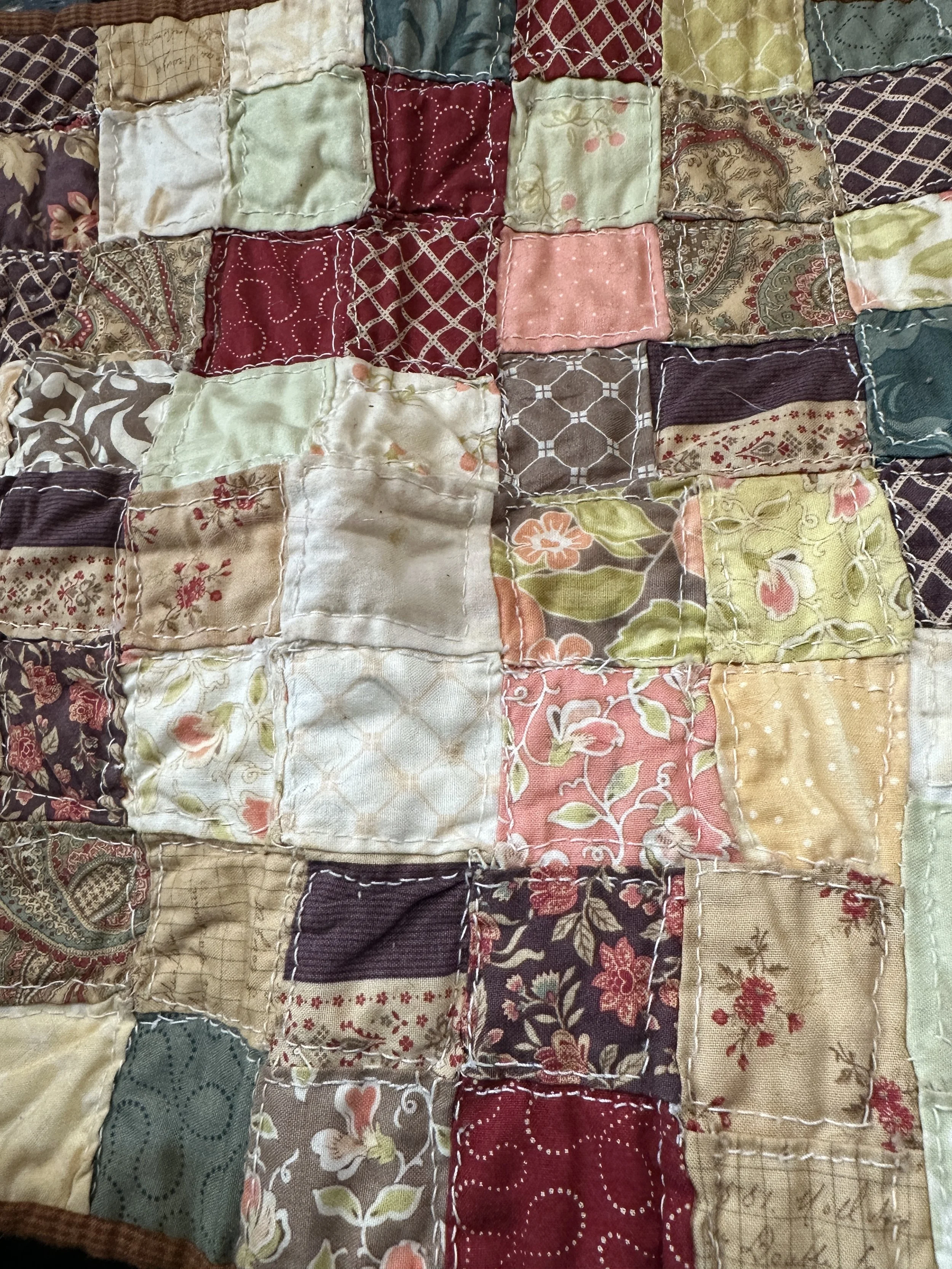
Some quilt stories are funny and entertaining, others still are dramatic and somewhat sad. What I have learned from interviewing people about their quilt stories is that, while the quilts may be made in a similar fashion, the people who make and own them are what set the stories apart. I first encountered Charlie at my friend’s creative space and quilt shop where I learned he made dolls and liked to write. His story, while sad in a way, was told to me peppered with a mix of laughter and melancholy. I hope you will hold it tenderly and with all the care he took to tell it.
Charlie Dale may seem, at first, as delicate as a hummingbird, but listening to his stories, I realize he is more like a free, soaring eagle; strong and stately. When we met for lunch, we spoke very little at first about his husband Jim’s quilt, talking instead about himself and Jim and their journey together. One moment he was telling me about a dancing priest and the next he was imitating Mae West (and doing quite the perfect impression). The performer in him is seeping out in the conversation about what has led up to the making of Jim’s quilt.
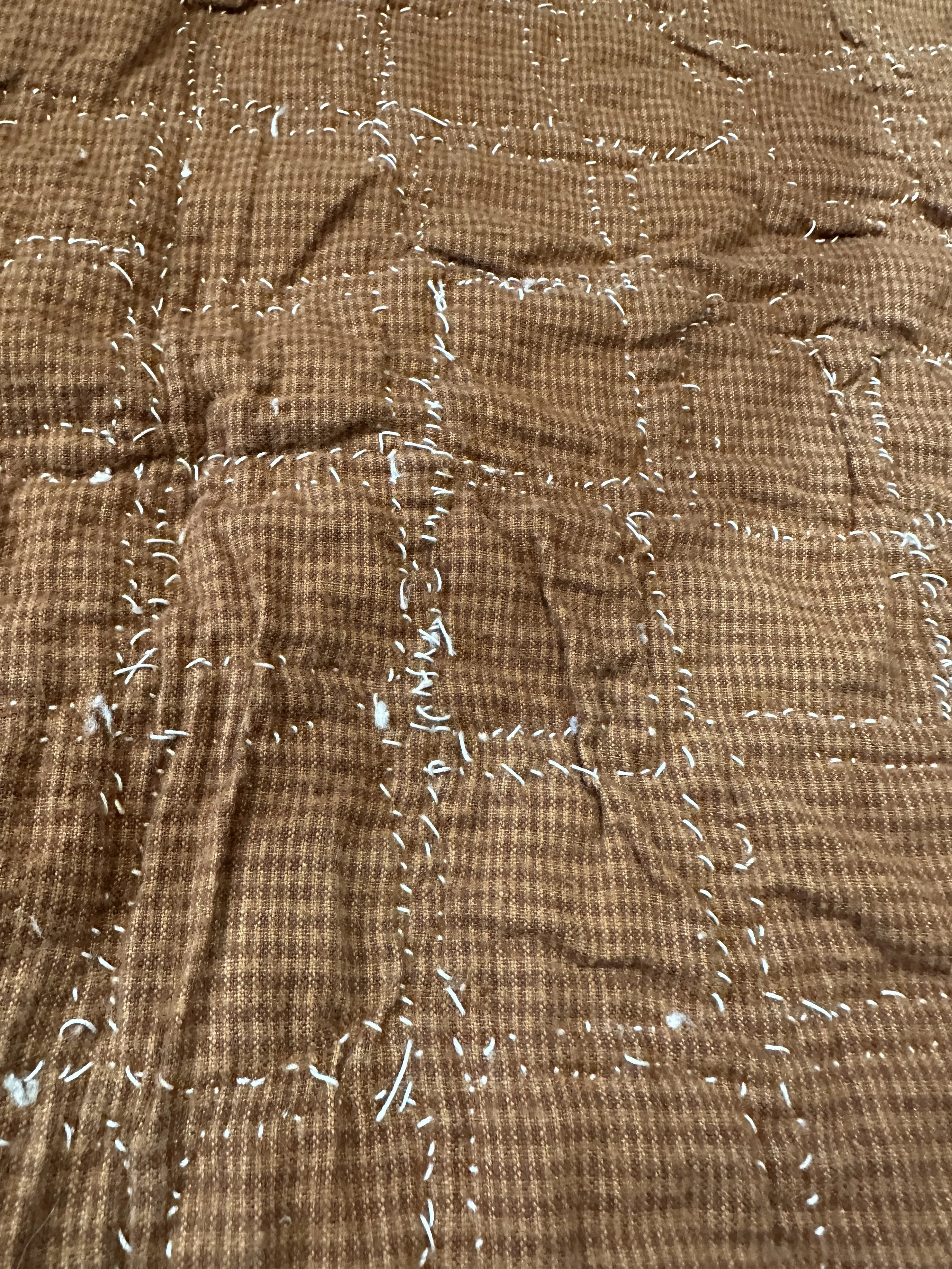
Jim died of cancer at age 79, just a few months shy of his 80 th birthday. Charlie was planning a big birthday bash that sadly, would never happen. Charlie speaks about this with regret in his voice, as if the tears he is choking back will flow forward with the force of a freight train he would be unable to stop. Prior to his death, Jim had been working on a small art quilt for a woman in Omaha who was a shut-in correspondent for the elderly. Father David, of Sacred Heart Church where the woman volunteered, is a priest who Jim first saw on You Tube dancing to the song “Oh Happy Day”. Jim was in hospice and watched Father David’s YouTube services weekly. He was working on the quilt while in hospice and his uneven stitches quietly reveal his suffering.
Charlie tells me stories of surviving the AIDS crisis where between 1986 and 2002, “600 names were added to the AIDS quilt in Washington, DC.” A quick fact shows that the number of names and panels on the quilt increased from 1,920 to over 39,000. Charlie was told by a friend that he is here to “tell the stories no one else can.” Out of the 50 people in his friend group, he is the only one who has survived. Charlie is a storyteller and loves to write. Jim read everything that Charlie wrote. We talk a bit more about the AIDS quilt and I tell Charlie I watched a webinar with a poet named Stefania Gomez, who wrote a poem about the woman who is a caretaker of the quilt. Her knotted hands have touched every single panel of the quilt in some way. Charlie tells me each block is three by six feet, the size of a coffin.
Charlie had a friend who had been sick for two years and was in hospice for 11 days, 9 and a half of which Charlie was at his bedside. He felt a tremendous amount of guilt that he had not been at his side when he passed away. Another friend told him he wouldn’t have died with Charlie right next to him. The weight this must have taken off Charlie’s mind is evident as Charlie relays this story, takes a deep breath, and lets his shoulders fall.
Charlie describes for me the last hours of Jim’s death. He had a horrible coughing spell, the day before he passed. At 6 am the next morning, Charlie said things were just very still. Sofia, the guys’ Yorkshire Terrier was sleeping under Jim’s hand and wasn’t moving. Charlie went to Jim, felt his hands which he says were ice cold. He called Kathy, the hospice nurse to say that Jim was gone. Missing though, was the guilt of not having been right by Jim’s side as he took his last breath; the words of a friend from long ago had taken hold.
Reflecting on Jim’s quilt, Charlie tells me he was “moved that Jim wanted to make that piece for someone he only knew through letters in Omaha who, like him, was older, sickly, and shut-in.” Charlie was impressed by the fact that Jim always pieced quilts by hand, something Charlie isn’t sure he, himself, would have the patience for. He sees, as did I when I first saw Jim’s quilt, the beauty in his stitches, at first even, then more and more wonky, but still in a forward direction.
Charlie speaks of Jim’s character and how he began quilting at the age of 14 and held the needle and continued to quilt until the end of his life. Charlie has had the quilt for the last five years since Jim’s death. He finished the stitches for Jim that had been left undone by his illness.
Charlie speaks of the joy Jim must have felt in the fact that he was stitching. He says the quilt speaks of Jim’s love for people and the very special time they had together before, and during his illness. They had 18 beautiful and sometimes, challenging, years together. And by the way Charlie was able to recall the details of this quilt’s story, their love for each other hasn’t died.